Speak: Language Learning
- 4.7
- Rating
- 10.00M
- Installs
- Free
- Price

 Analysis by App-foxy
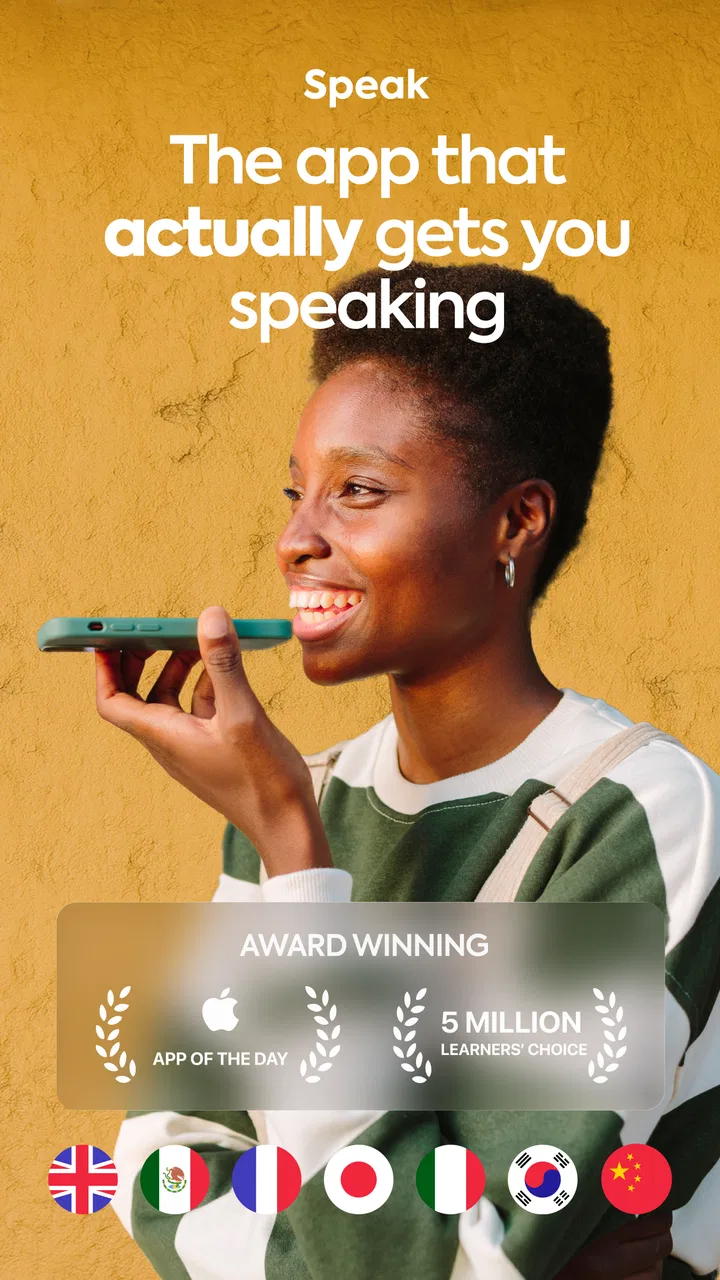
I found Speak: Language Learning most useful when I treated it as a speaking practice tool rather than a complete replacement for every part of language study. It is an education app from Speakeasy Labs built around using your voice while learning Spanish, French, English, or Japanese. That focus makes it feel more active than simply tapping through recognition exercises, especially when I want to get comfortable producing words out loud.
The app is free to install and is rated for Everyone, so it is approachable for casual learners and families looking for a low-risk starting point. It has reached over 5 million installs and holds a 4.7 average from around 101 thousand ratings, which gives me confidence that the basic idea works for a large audience. Still, popularity does not make it suitable for every learner. The important question is whether speaking practice is the gap in your current routine.
How Speak fits into real language study
I think the most useful way to judge Speak is to ask whether speaking is the part of your study routine you tend to avoid. In this section, I’ll look at how its voice-first approach can fit alongside lessons, reading, and conversation practice, and where that focused role becomes a limitation. That distinction helps set realistic expectations before deciding what to watch as the app evolves.
You May Also Like

 AccuWeather: Weather Radar
AccuWeather Review: A Quick, Clear Forecast for Everyday Decisions
For everyday plans, the best forecast is the one you can understand quickly. AccuWeather makes rain timing, radar, and local conditions easy to act on, with a few trade-offs.

 Hill Climb Racing
Why Hill Climb Racing Still Turns Crashes Into One More Run
A tiny car, a bumpy hill and one more upgrade: Hill Climb Racing keeps resurfacing because its simple chaos makes every near-miss feel personal.

 AliExpress - Shopping App
AliExpress Makes Global Shopping Feel Personal, but Shoppers Bear the Risk
AliExpress turns a global marketplace into a pocket-sized discovery engine. Its reach is useful, its shopping loop compelling, and its trade-offs easy to miss.

 Lords Mobile: Kingdom Wars
Lords Mobile Is a Kingdom-Building Routine, Not a Quick Match
A case-by-case verdict on the building, battles, device demands, and social commitments that make Lords Mobile rewarding for some players and exhausting for others.

 PDF Scanner app - TapScanner
TapScanner Makes Paperwork Easier to Capture, Check, and Share
TapScanner makes scanning with a phone feel less like a rescue operation and more like a dependable step in getting work done. Its capture tools are useful, though not flawless.

 Block Blast!
 Shows How Much a Puzzle Game Can Leave Out
A quiet grid game shows why puzzle players increasingly value instant clarity, repeatable skill and low-pressure play—and where the genre still needs to catch up.
More From Our News Desk
View All News


A voice-first approach instead of passive memorization
Many language apps are comfortable because they let me identify an answer, match a translation, or arrange words without actually saying much. Speak takes a different route. Its central promise is practice through speaking, so I have to move from recognizing a phrase to attempting it myself. That small change matters: knowing what a sentence means is not the same as being able to produce it quickly in a conversation.
I would use it after learning a few useful expressions elsewhere, or as a daily warm-up before a class or conversation exchange. Saying a phrase repeatedly helps expose problems that silent study hides, such as hesitating over word order or losing confidence halfway through a sentence. The experience is especially relevant for travelers, beginners who feel nervous speaking aloud, and learners who can read more comfortably than they can talk.
The available languages are Spanish, French, English, and Japanese. That is a focused selection rather than a huge catalog. For someone studying one of those languages, the narrower range is not a problem; it may even make the app easier to understand as a dedicated speaking companion. If your target language is outside that group, this is simply not the right download for your goal.
What the free access means in practice
The app can be downloaded free of charge, which makes trying the speaking method straightforward. I appreciate that distinction because a free installation is not the same thing as unlimited free learning. Speak includes in-app purchases ranging from $14.99 to $349.99 per item, so the financial value depends on what access is available to you without paying and whether the paid options match your intended study period.
I would begin with the free experience before considering any purchase. Use it long enough to answer practical questions: Do you enjoy speaking to the app? Does the correction style help you notice mistakes? Can you imagine returning to it several times a week? If the answer is no, paying will not solve the underlying mismatch. If the answer is yes, the paid value should be judged by how consistently you expect to use the lessons, not by the impressive size of the app’s audience.
The listed purchase range is wide, so I would read the exact offer shown inside the app before confirming anything. A short trial of the routine may be worthwhile, but I would not assume that every learner needs the highest-priced option. The verified price facts establish that paid items exist and can be expensive; they do not justify treating every purchase as necessary.
A realistic routine for a busy learner
Imagine I am preparing for a trip and have fifteen minutes during a commute, a lunch break, or while making coffee. I could open Speak, choose a short speaking session, and say the phrases instead of merely reviewing a list. The useful part is not squeezing in a large amount of material. It is creating a repeatable moment in which my mouth and ears participate in the learning.
I would keep a small note of phrases that caused repeated hesitation, then revisit those phrases later rather than rushing through new material. That workflow turns the app into a targeted rehearsal tool. It also prevents a common mistake with speaking apps: confusing a session completed with a skill actually improved.
For pronunciation, I would say each difficult phrase once naturally, once more slowly, and once at a normal conversational pace. The goal is not to sound perfect immediately. It is to notice whether the difficulty comes from individual sounds, unfamiliar rhythm, or simply not remembering the sentence quickly enough. Speak is most useful when I use its speaking requirement as feedback for my own study decisions.
Where it is stronger than ordinary alternatives
Compared with flashcards, Speak gives me a reason to produce language instead of only recognizing it. Compared with a textbook, it can make practice feel more immediate and less dependent on finding a study partner. Compared with a traditional class, it is easier to fit into an irregular schedule and less intimidating when I am still embarrassed by mistakes.
Those advantages come with an important boundary. A speaking app cannot fully recreate the unpredictability of a real person. A tutor can interrupt, rephrase, explain a cultural nuance, and adapt the conversation to my interests. A language exchange gives me genuine listening pressure and social context. A grammar reference can also explain why a sentence works in a way that a quick practice activity may not.
For that reason, I would not choose Speak as my only resource if I needed formal writing, detailed grammar preparation, or advanced professional conversation. I would pair it with reading, listening, and human interaction. Its best role is the bridge between silent study and real speech.
Small habits that make the speaking practice better
One useful habit is to avoid whispering. When I speak too quietly, I am practicing a version of the language that may not transfer well to a normal conversation. I would use a calm, audible voice and find a private place if I feel self-conscious. The point is to make speaking ordinary, not to perform perfectly for the app.
Another is to repeat a lesson after a delay rather than immediately chasing a flawless attempt. An instant repeat mostly tests short-term memory. Returning later shows whether the phrase is becoming available when I need it. I would also alternate between familiar expressions and new material, because confidence grows from successful retrieval while progress requires some controlled difficulty.
A third tip is to separate pronunciation problems from vocabulary problems. If I cannot say a phrase because I do not remember its words, repeating the sound will not fix the real issue. I would first review the meaning, then practice the full sentence aloud. This simple distinction keeps the app from becoming a frustrating loop.
Limitations I would consider before paying
The voice-first design can feel uncomfortable at first, particularly in a shared home, office, or public place. Learners who prefer silent study may find the core interaction intrusive rather than motivating. Speak is also less appealing for someone who mainly wants broad vocabulary browsing or detailed written explanations.
The four-language selection is another practical limitation. It covers several widely studied languages, but not every learner’s destination. I would check that my preferred language is included before building a routine around the app. A broad language platform may be a better choice if I regularly switch between less commonly supported languages.
There is also a risk of overestimating progress because speaking a familiar prompt can feel smooth after repetition. I would test myself with new situations and try to form original sentences outside the app. If I can only reproduce practiced lines, I need additional conversation and listening work. Speak can encourage active production, but I still have to transfer that ability into unpredictable exchanges.
Who will get the most value
I think Speak is a strong fit for beginners who want to start talking earlier, learners who understand a language but freeze when asked to respond, and busy people who need a compact speaking routine. It also suits travelers preparing practical phrases and students who want extra rehearsal between lessons. The free entry point makes experimentation sensible, especially when I am unsure whether voice-based practice will hold my attention.
It may also help people who dislike the pressure of speaking with another person immediately. Practicing alone can lower the emotional barrier. Once I become more comfortable answering aloud, I can take those phrases into a tutor session or language exchange with less hesitation. That progression is more realistic than expecting an app to replace every social stage of learning.
I would skip it if my target language is not Spanish, French, English, or Japanese, or if I strongly prefer silent exercises. I would also look elsewhere if my main need is advanced grammar analysis, essay correction, or sustained conversation with a human teacher. In those cases, a textbook, tutor, or specialized writing service may deliver more relevant value than a speaking-centered app.
Device details and day-to-day expectations
Speak runs on Android eight or later, so users with older devices should check compatibility before planning around it. The current version is 4.27.1, which is useful to know when comparing the experience on different phones or troubleshooting an installation. I would keep the app updated through the normal store process, particularly for a tool whose main interaction depends on speaking and listening.
The Everyone content rating makes it a broadly accessible education choice, but younger learners may still benefit from an adult helping them create a realistic routine. The app can prompt practice, yet consistency, patience, and outside exposure remain the learner’s responsibility. I would rather see a child use it briefly and regularly than be pushed into long sessions that make speaking feel like homework.
My value judgment
What I like most is the way the app targets a real weakness in language learning: the gap between understanding and responding. It gives me a reason to open my mouth, notice hesitation, and build comfort with spoken phrases. That is more valuable than another passive review session when my immediate goal is to communicate aloud.
What keeps me cautious is the payment structure. Free access makes the app easy to test, while the in-app purchase range means I would make a decision only after confirming exactly what the chosen option unlocks and how long I expect to use it. I would not buy simply because the app has a strong rating or millions of installs. The purchase is worthwhile only if I am actually returning to speak several times a week.
After using it as a focused practice companion, I would recommend Speak: Language Learning to anyone whose biggest obstacle is speaking confidence in one of its four supported languages. I would start free, establish a short routine, and combine it with real listening and human conversation. The clearest reason to choose it is active speaking practice, not a promise to cover every part of language learning. If that is exactly what you need, it can earn a place in your study schedule; if you want a complete course, a broader platform or a teacher will be the better investment.
FAQs for Speak: Language Learning
01What languages can I learn with Speak: Language Learning?
Speak: Language Learning offers a wide variety of languages, ranging from popular options like Spanish, French, and Mandarin to less common ones such as Swahili and Icelandic. The app frequently updates its library, ensuring learners have access to the most in-demand languages globally.
02Is Speak: Language Learning suitable for beginners?
Yes, Speak is designed to accommodate learners at all levels. Beginners will find structured lessons that start with basic vocabulary and grammar, while advanced users can access more challenging content and practice conversations. The app adapts to your pace, making it suitable for everyone.
03How does the app enhance language retention?
Speak: Language Learning uses spaced repetition techniques to reinforce memory and retention. Interactive exercises, engaging quizzes, and real-life conversation practices help users remember vocabulary and grammar rules effectively. The app also includes regular assessments to track progress and identify areas for improvement.
04Does Speak: Language Learning require an internet connection?
The app offers offline capabilities for many of its features, allowing users to download lessons and practice without an internet connection. However, certain features, such as live conversation classes or updates, may require connectivity to function properly.
05Are there any subscription fees or in-app purchases?
Speak: Language Learning offers a free version with basic features, but to unlock advanced lessons and premium content, a subscription is required. The app provides various payment plans, including monthly and annual subscriptions, along with occasional discounts for new users.
Pros
- Intuitive interface for easy navigation
- Diverse language options available
- Interactive lessons boost engagement
- Offline mode for learning on the go
- Regular updates enhance content
Cons
- Requires premium for full access
- Limited free trial period
- Occasional app crashes
- Ads in the free version
- Some languages lack depth

Speak: Language Learning
Gallery